
· Updated
Estonian companies operating in Finland are often unpleasantly surprised by an AVI inspection, as it brings a number of obligations, and failing to meet them can result in a hefty fine for the company as well as the loss of work permits. In the article below, we explain what AVI is, how to prepare for an AVI inspection and how to avoid the surprises that come with it.
What is AVI?
AVI, or the Regional State Administrative Agency (aluehallintovirasto), is an authority with a broad remit whose tasks include advising on various questions concerning people's rights and handling proposals and complaints; for example, AVI deals with patients' rights and the lawfulness of alcohol marketing. AVI is also responsible for issuing licences (for example for selling alcohol in a restaurant) and for granting state funding, for example for building schools, libraries, sports facilities and the like.
In addition to the above, one of AVI's most important tasks is to supervise occupational safety and health, which includes ensuring that employers comply with the law and are responsible for making sure that people's working conditions meet the guidelines and legislation of the Department for Work and Gender Equality of the Finnish Ministry of Social Affairs and Health. The aim of supervision is to ensure that working in Finland is "healthy, safe and fair". In Finland, AVI has a function similar to that of the Labour Inspectorate (Tööinspektsioon) in Estonia, but considerably wider powers.
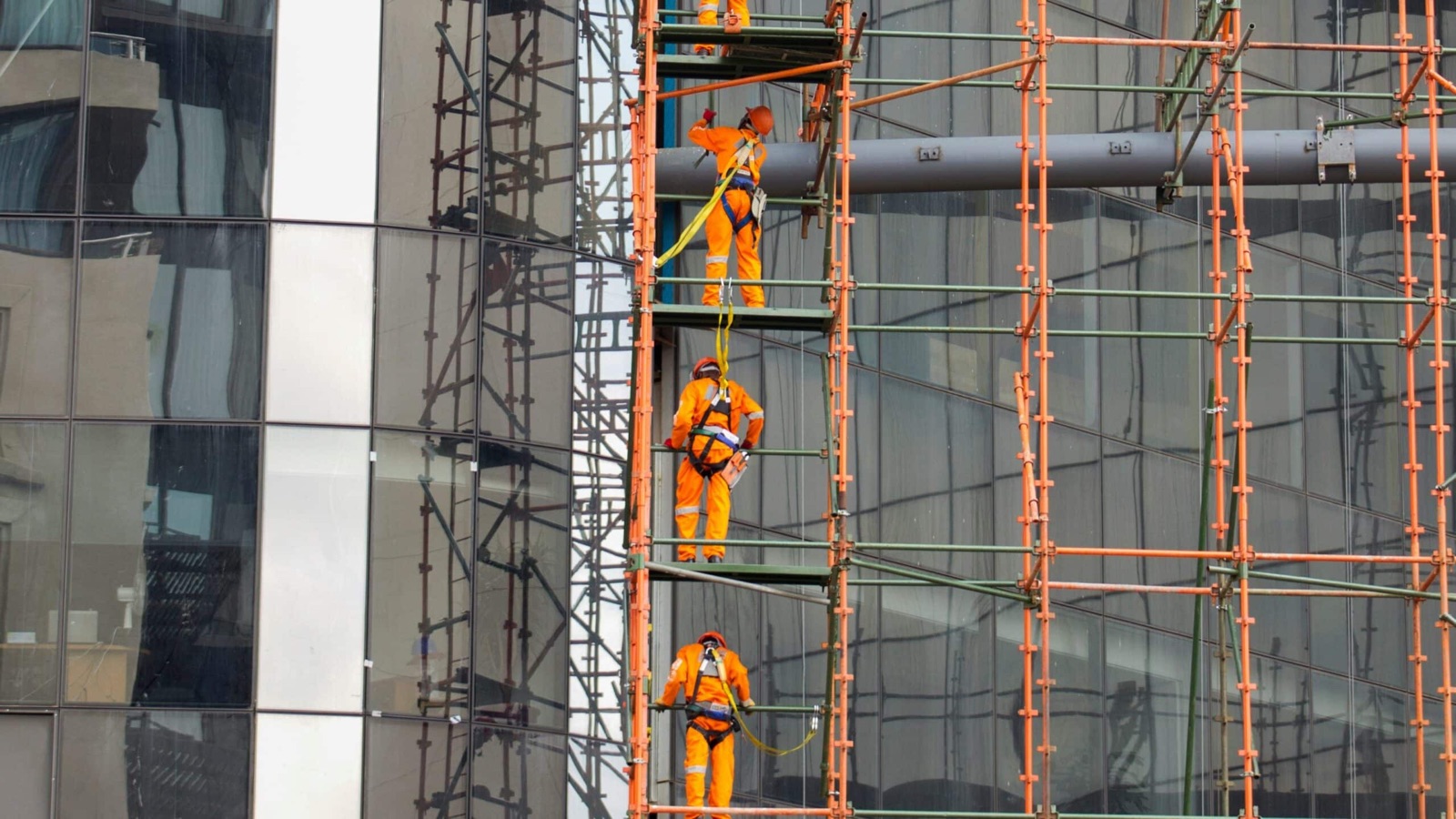
AVI pays particular attention to the construction sector, where the rights of foreign workers are violated fairly often, either deliberately or out of ignorance.
Reasons for an AVI inspection
Broadly speaking, an AVI inspection visit takes place for two reasons: first, an inspection is carried out on the complaint or request of a party concerned; second, spot checks are made on the basis of random sampling.
AVI inspection on complaint or request
Employee complaint
A common reason for an AVI inspection is a complaint from an employee who has found out that their rights are being violated and has not been able, or has not known how, to resolve the problem with the employer. Or the employee may simply turn to AVI for legal advice, which AVI provides free of charge. Very often the reason is unfair compensation for overtime.
In Finland, overtime pay is governed by occupational safety and health legislation. Overtime must be compensated with paid time off or with higher-than-normal pay. Higher-than-normal pay also applies to work at weekends and on public holidays.
In our practice we have seen employers base an employee's pay on the total fee for the project and therefore apply the same hourly rate to all work, regardless of when it was done, but the law does not allow this. When employees become aware of their right to extra pay, they often turn to AVI to protect their rights.
Request from the main contractor
An AVI inspection is often requested by the main contractor, who is unsure whether its subcontractors are operating lawfully and wants to make sure that, if problems arise, it will not be held liable for work the subcontractor failed to do properly. Often the reason is that the main contractor notices third-country nationals on the site and wants to check that they have the permits needed to work in Finland. The main contractor is proactive because ultimate responsibility for what happens on the construction site lies with it, and if illegal labour turns out to have been used, it is difficult for the main contractor to prove during a random inspection that it was not aware of it.
Workplace accident
As in Estonia, workplace accidents in Finland must be reported to the authorities. A workplace accident is usually followed by a thorough inspection covering both the conditions on site and the documentation concerning the employees.
AVI inspection based on random sampling
AVI inspectors also actively inspect companies on the basis of random sampling or through visits on their own initiative. In 2017–2022, almost 130,000 workplace inspections were carried out. Nearly half of the inspections concerned safety and a quarter the physical working environment. In 16% of cases the main basis for the inspection was the employment relationship, in 8% the grey economy and in 4% the psychosocial working environment. In 2022, inspectors issued 6,200 improvement notices after finding breaches of legislation.
What are the main requirements an employer in Finland must meet so that an AVI inspection does not result in an improvement notice?
Advance notification
It is important to bear in mind that employers must submit an advance notification through the AVI online service about employees arriving to work in Finland. Although it is a common misconception that this does not apply to workers coming from an EU Member State, they too must be notified. It is important that the notification reaches AVI before the workers arrive at the workplace or site, and it must not be submitted on the same day work begins.
Contracts, insurance, occupational health documentation
The employer must have concluded a proper contract with the main contractor and provided the main contractor with the details and documentation of the employees working on the site. The existence of this documentation is checked during an AVI inspection. It is common for inspectors to come to inspect one company but, for practical reasons, to inspect all the companies involved in the construction project – both the main contractor and the subcontractors.
If employees are posted to work in Finland, you also need to apply for an A1 certificate, which shows that social security contributions (pension, unemployment, social tax) are paid in Estonia. AVI checks this too. Valid insurance contracts and occupational health care contracts are also important.
Accurate working time records are essential
Working time records are required on construction sites and at other workplaces that use averaged working time. Working hours must be documented from the first working day, by the hour and separately for each employee. This makes it possible to determine clearly how much overtime has been worked and on what basis extra pay should be paid or paid time off given.
If the working time record has not been kept properly and compliance with the law cannot be proven with documents, the record has to be reconstructed retrospectively. AVI checks working hours registered with access cards, obtaining the information from the main contractor, and compares the data very closely.
Complying with an improvement notice and fines
The usual pattern is that, based on the first inspection, AVI issues an improvement notice stating what should be changed and done differently, and sets a deadline. You can be sure that AVI will also carry out a follow-up inspection to verify that the notice has been complied with. Fines are usually imposed after the follow-up inspection if the notice has been only partly implemented or not implemented at all. Fines are usually steep, and paying a fine does not release you from the obligation, as fines can be imposed repeatedly until the notice has been fully complied with.
During its inspections AVI considers fair pay particularly important, so as to ensure the higher pay for overtime and evening hours, or time off in lieu, required by Finnish law. AVI has recommended introducing a working-hours bank system, which helps ensure fair recording of working time and pay with flexible work schedules.
How can our consultants help you?
Wisecounter's consultants can help you prepare for an AVI inspection and rule out surprises if an inspection takes place. We can also help if you have already been subject to an AVI inspection or have information that such an inspection will be carried out soon.
Our expertise includes preparing proper documentation: the A1 application, contracts, accurate payroll, insurance and more. We also help set up easy-to-use working time recording.
If needed, we will handle communication with AVI on your behalf. Our consultants communicate with the Finnish authorities in Finnish. It is also possible to deal with matters in Finland in English, but our experience shows that communicating in Finnish gives more flexibility in discussions and better results.