
· Updated
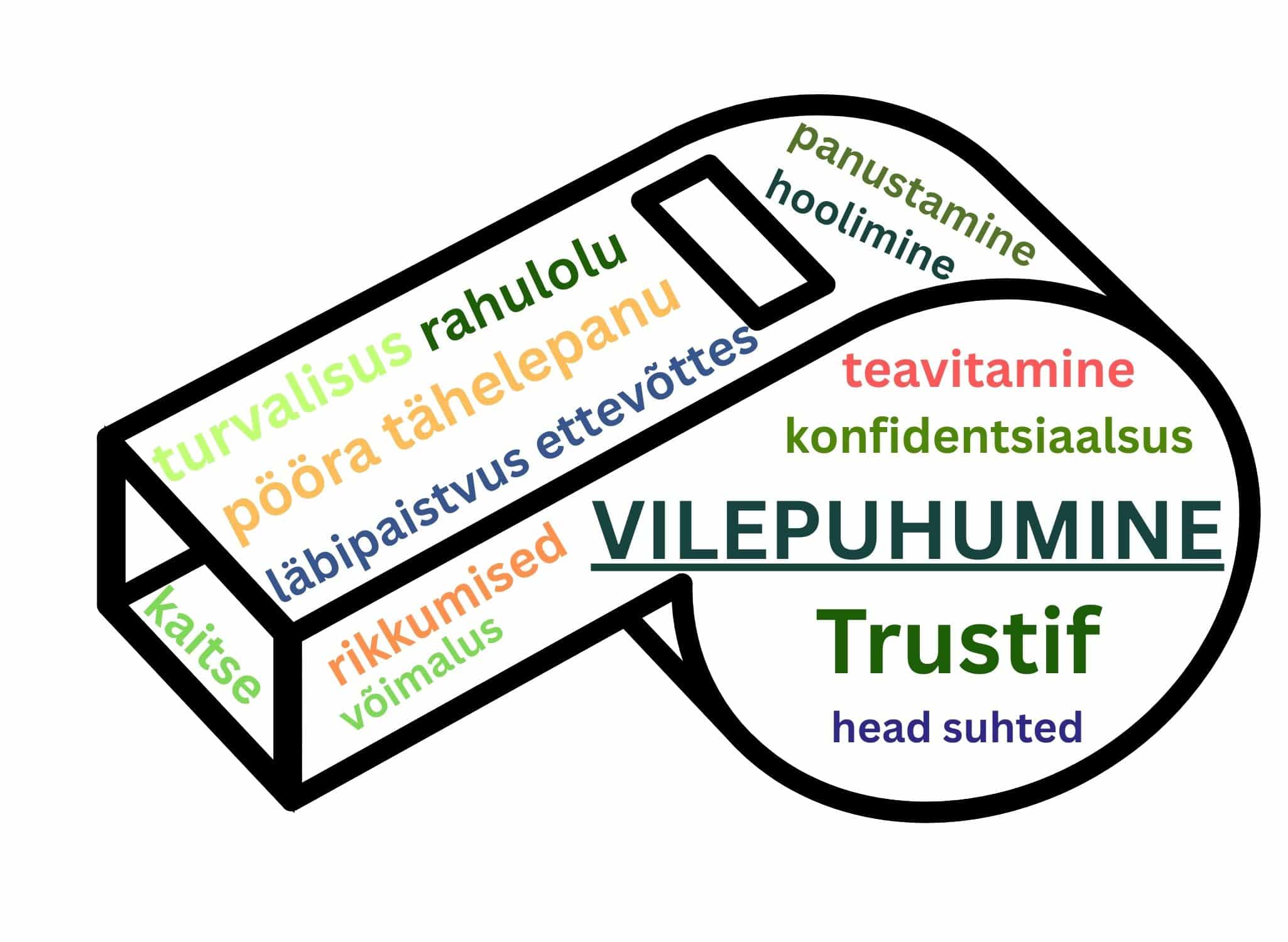
In this article we explain what whistleblowing is and what the relevant draft legislation provides. We also explain who has the right to report breaches, how to do it and why reporting matters. In addition, we look at how the confidentiality of whistleblowers is ensured and what the advantages of outsourcing the reporting service are. The article was written in cooperation with Trustif.
What is whistleblowing?
Whistleblowing means reporting misconduct. The term comes from sports competitions, where referees blow the whistle to draw attention to mistakes. The purpose of whistleblowing is to bring to light problems that might otherwise go undetected and to help ensure the rule of law and transparency. A whistleblower may report a breach within the organisation, to an authority set up for that purpose or to the public. It is important that the report is made in good faith and with the aim of preventing or stopping a breach, not for personal gain or to cause harm.
The reporting system has three parts:
Internal reporting - mandatory for all public sector bodies, companies operating in the financial sector, companies involved in food and product safety, and companies with at least 50 employees. Companies with fewer than 50 employees are not required to set up an internal reporting channel, but their employees must still have the possibility to report breaches, for example to a person designated within the company. An internal reporting channel must ensure the confidentiality of the whistleblower: the employee gives their name when reporting, but during the investigation there is no right to disclose it without the employee's own consent. This is particularly important when reporting in writing (e.g. by e-mail or through a dedicated website).
External reporting - Everyone has the right to raise their concerns, and there are public authorities that deal with breaches for this purpose (e.g. supervisory or law enforcement authorities). This is an alternative to the internal channel, especially if the employee does not trust the organisation's internal system or fears retaliation.
Public disclosure - Everyone can disclose a problem publicly. In the case of public disclosure, confidentiality is not sought, so the people involved know who reported and what about. Public disclosure makes it possible to assess the situation together and decide how to proceed. However, it can lead to tensions within the company, which is why confidentiality in reporting is considered very important. Public disclosure may, but does not have to, take place through the media.
The draft legislation provides for liability of both natural and legal persons in order to ensure the effectiveness and reliability of the reporting channel. Knowingly submitting a false report is prohibited, and in that case the whistleblower is not covered by legal protection and may instead become the victim of disclosure and retaliatory measures by the employer. To avoid such situations, it is important that employees are informed of how the channel works and of the consequences involved. This helps to prevent malicious reporting and possible harm to third parties.
Who has the right to report breaches:
- a person working under an employment contract or another contract under the law of obligations;
- a civil servant;
- a sole proprietor;
- a member of the management or supervisory body of a company, non-profit association, foundation or state profit-making institution;
- a shareholder or member of a company;
- a person acting as a volunteer;
- a person doing an internship at an authority or with a legal person or sole proprietor;
- a person in pre-contractual negotiations or otherwise preparing a contract, or a person whose employment relationship has ended;
- a person receiving an athlete's grant;
- a person working for a contractual partner of an authority or legal person in one of the forms referred to in points 1–9 of this subsection.
Why is it important to report breaches?
In addition to being mandatory for many companies, reporting breaches is important because it helps to detect and eliminate in good time problems that may threaten the internal functioning of the organisation, the well-being of employees or the public interest. Reacting early makes it possible to avoid more serious consequences, including breaches of the law, financial losses or conflicts between employees. In addition, an informed and transparent reporting culture helps to prevent reputational damage that may arise when breaches come to light through the public or too late. A company's good reputation is the foundation of trust and long-term success: when an organisation can show that breaches are taken seriously and dealt with systematically and responsibly, trust grows in the eyes of employees, customers and business partners alike.
Providing evidence when reporting a breach is not always mandatory, but it is highly recommended, as it makes the report more credible and allows the competent persons to investigate the situation more quickly and effectively. This is particularly important in cases where the breach is directed at the whistleblower or another employee, for example in the case of harassment, discrimination or violation of employee rights at the workplace. Such situations are often one person's word against another's, where additional evidence (e.g. e-mails, messages, recordings or names of witnesses) can be decisive. At the same time, it must be understood that not every breach leaves clear traces, which is why reports to which no specific evidence can be attached straight away are not excluded either. Nevertheless, it is important that the information provided is given in good faith and is as accurate as possible, in order to avoid false accusations.
Protection of whistleblowers
Since 2023, Estonia has had a whistleblower protection act based on the corresponding European Union directive. Its purpose is to protect people who report work-related breaches in good faith and in accordance with the procedure laid down by law. Whistleblowers must be able to provide information without fear of retaliation such as dismissal, humiliation, threats or other unfavourable treatment. One of the most effective protective measures is ensuring confidentiality, which reduces the risk of the whistleblower being personally attacked. It also helps to keep the focus on the breach itself rather than on the person reporting it, which is very important for the credibility and functioning of the whole system.
Outsourcing the service - Trustif
Managing an internal reporting channel takes a lot of resources, as it requires a separate team to read through the reports and deal with them. For companies that have no need or capacity to set up an internal whistleblowing system, a good solution is to outsource the reporting service to a reliable third party.
Outsourcing the service offers a number of practical advantages: it helps to save costs and time, removes the need to create new positions and reduces the administrative burden within the organisation. In addition, using an independent service provider ensures neutrality and reliability.
Such a solution suits both smaller companies and larger organisations that want to ensure compliance with legal requirements and create a functioning, secure and transparent reporting environment.
Trustif is a company that manages whistleblowing channels, offering its clients a secure way to report their observations as well as personal and meaningful support. In addition to collecting reports, Trustif works with experienced lawyers and accountants, which ensures that every case is handled professionally and thoroughly, making it possible to find the most tailored and legally correct solution to the problem. All client data is treated as strictly confidential, and information is shared with third parties only with the client's written consent. The Trustif platform complies with the international information security standard ISO 27001, which ensures a high level of data protection and system reliability. As a result, Trustif's service is suitable for companies that want to meet their legal obligations in a well-considered, efficient and reliable way while ensuring the sustainability and development of their business. (more information: https://trustif.ee/)
Get help from a specialist
This article sets out the most important information on whistleblowing that is worth being aware of. It is always a good idea to discuss each individual case in more detail with our staff to avoid any possible misunderstanding or misinterpretation.